
Labor 101 Series by Nikki Porcher
The Labor Commissioner’s Role During Plant Closures, Layoffs & Disasters

When a plant closes or a storm tears through the state, I think about the faces I’ve seen in those first days — the line at a career center, a mom at the kitchen table sorting papers, a small-business owner wondering how to keep staff.
As a community advocate who has connected families across Georgia to housing, resources, and job opportunities, I’ve learned that the difference between a short setback and a drawn-out recovery is what happens right away, and whether people know exactly where to go for help.
That’s why the Department of Labor needs to offer clear steps, fast answers, and real pathways back to work, especially during times of crisis. Here’s what that should look like in Georgia.
What the Labor Commissioner leads in a crisis
Rapid response for affected workers: On-site or virtual sessions (often with local workforce boards) to deliver immediate Unemployment Insurance (UI) guidance, resume help, job referrals, and fast-track training options tied to real openings.
Mass-layoff UI intake: Streamlined unemployment insurance processing for large groups, so benefits can be paid quickly and appeals handled fairly.
Jobs, training, and skills data: Clear county/region snapshots highlighting how many workers were affected, which occupations were hit, where matching jobs exist, and which training seats are available.
Public communication: Plain-language updates on who qualifies for what, how to apply, and when/where help desks and hiring events are happening.
Employer coordination: Guidance on separations, compliance, and hosting hiring fairs or on-site events; as well as rapid-response support during closures to meet notice requirements.
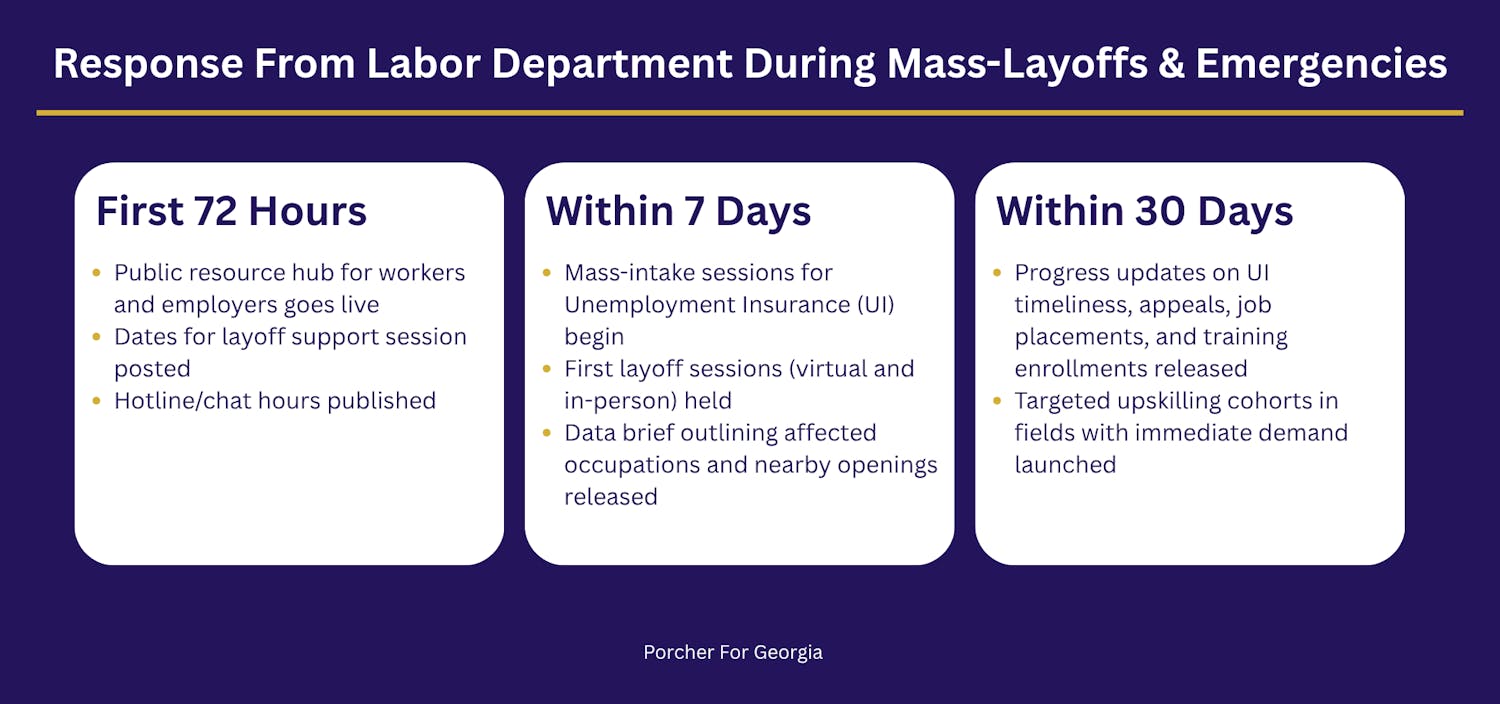
In terms of a timeline, from Day One to Day 30, this is what you can expect to see:
If you’re a worker
Apply for unemployment insurance immediately: Don’t wait for your last check, file as soon as you’re separated.
Attend a layoff support session: Here you should get UI guidance, job referrals, and training options that lead to real jobs.
Use career centers and job tools: You should be able to get support with resume reviews, interview prep, as well as access to curated hiring events, and state job boards to speed your search.
Ask about training referrals: If a credential is your bridge back to work, you should be able to request a WorkSource Georgia referral.
For any layoff support sessions and clinics, bring your photo ID, last pay stub, separation notice (if any), work history, and direct-deposit info.
If you’re an employer planning a layoff or closure
Notify early and coordinate: Early notice enables on-site rapid response and smoother UI processing (larger layoffs may trigger WARN requirements).
Share accurate separation info: Clear, timely records reduce claim errors and speed payments.
Host on-site support: Allow GDOL/workforce partners to meet employees before the last day to file UI, schedule resume help, and discuss training options.
Connect to jobs: Co-host hiring fairs, and share vendor and nearby-employer contacts so workers can land jobs quickly.
If you’re a local leader or partner
Provide space and signal-boost: Host rapid-response sessions, while also sharing the official resource hub.
Align training seats: Work with workforce boards and technical colleges to fund short, in-demand programs.
Track outcomes: Request updates on UI timeliness, job placements, and training enrollments so the community can see progress.
Why this is personal to me
I’ve worked with with families who have lost work overnight. I’ve stood with small-business owners deciding whether they could keep one more person on payroll. And I’ve watched communities move faster and recover faster when they get the right support, quickly and efficiently. That’s the standard I’ll set: modern systems, honest data, and everyone pulling in the same direction so help arrives when people need it, not weeks later. This is the kind of system I’m committed to building — one that moves quickly, communicates clearly, and supports people instead of confusing them.
Donate to Porcher For Georgia
If you found this article helpful, invest $100, $250, or $1,000 to help us reach more Georgians and build a workforce system that works for everyone. Donate to the campaign.