
By Nikki porcher
What the National Prayer Breakfast Revealed About Power
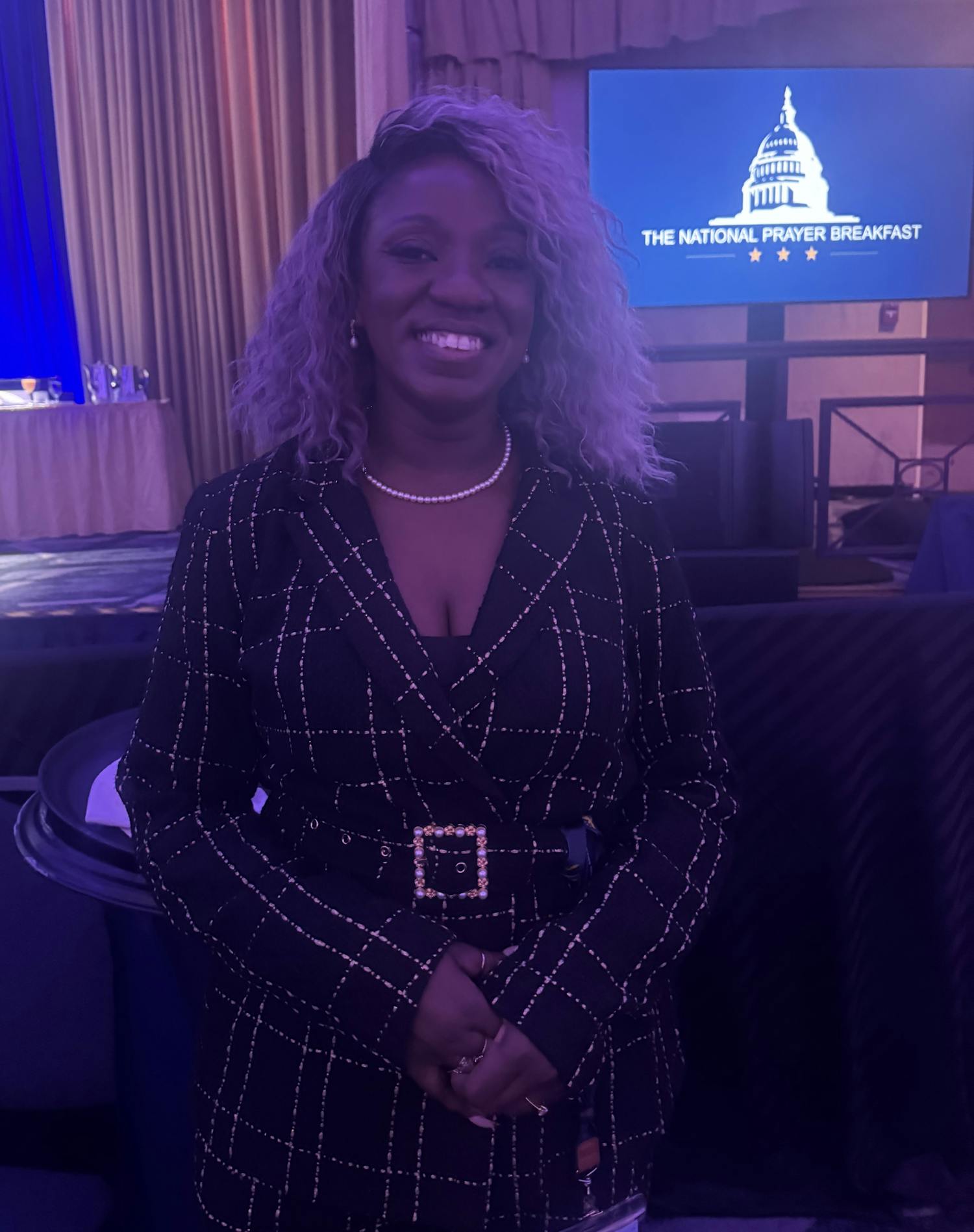
I almost did not go. As a first-time candidate running for public office, I debated whether attending the National Prayer Breakfast was the right decision, especially in this political moment. Each day brought new headlines about immigration raids, mounting investigations, and rhetoric that demeaned women and deepened division. I questioned whether showing up would mean compromising my values.
I decided to attend anyway. Not because I agreed with everything associated with the event, but because I wanted to understand how power actually works in America. I wanted to see it for myself.
What I expected was discomfort. What I encountered was clarity.
My first event was a women’s tea. I met women who were supportive of me being there. They prayed over my campaign and my election. One woman from Georgia told me plainly, “I can vote for you, and I will.” It felt sincere and grounding.
That sense of openness followed me into the opening dinner that evening. Seating was unassigned. I sat at a table of men who told me they were from an American city, but throughout the dinner, they spoke Ukrainian. The conversation was polite but distant. The main dish was chicken, which I do not eat, so I was served ravioli instead. The food was forgettable. The evening itself felt carefully neutral.
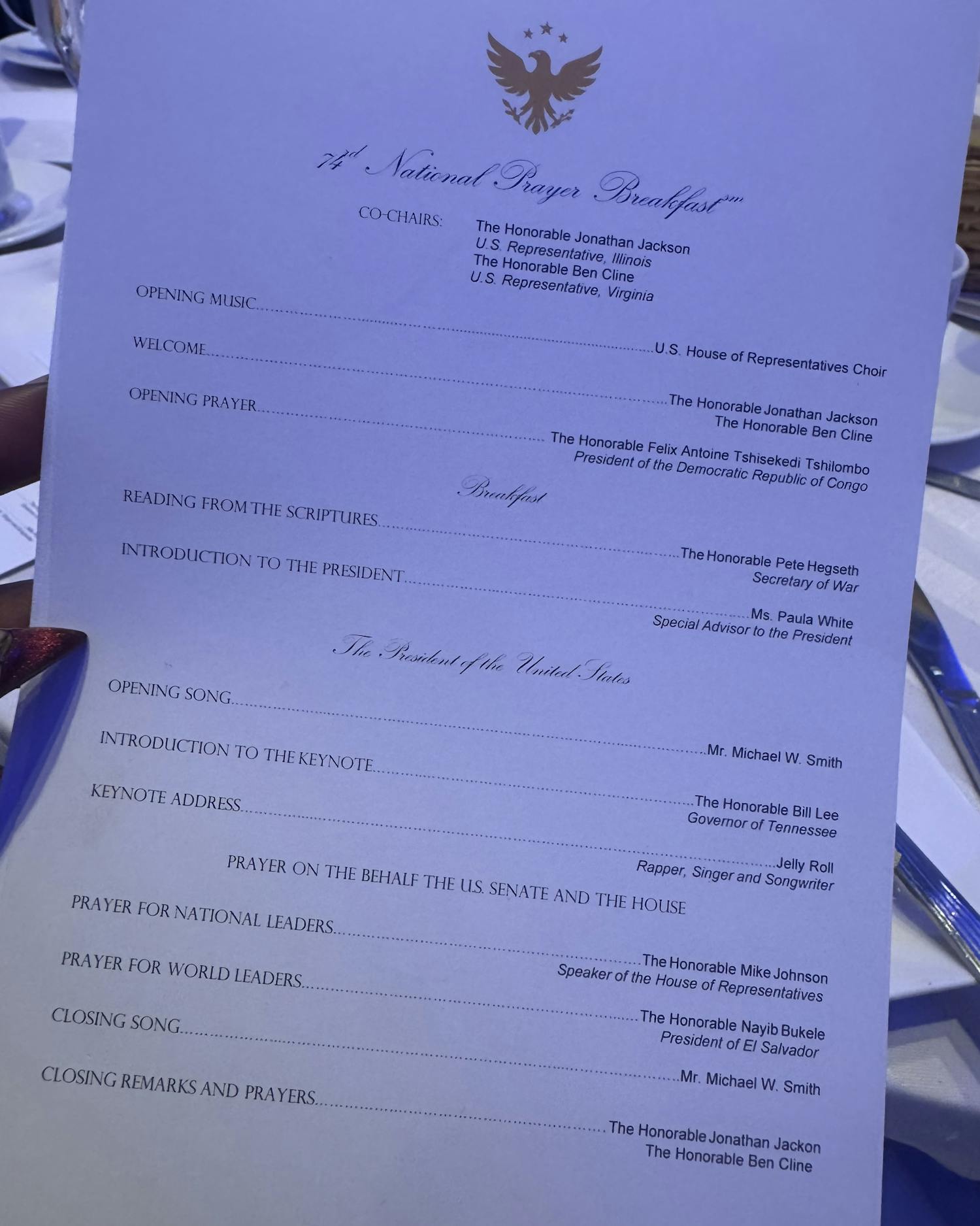
The next morning was the Prayer Breakfast.
Security was intense. The room was oversold. My table was pushed to the back and tightly packed. The food was cold, bland, and clearly beside the point. It became obvious that the breakfast was not about the breakfast.
Before the event, I was stopped by a woman who introduced herself as another candidate. She talked about how isolating this process can be and how we could support one another, even though we live in different states. Later, another woman learned that I lived in Georgia, referred to my senator as “Warlock,” and told me to trust my gut. As those conversations unfolded, I overheard someone casually discussing a visit to Mar-a-Lago and inviting others to an international prayer breakfast in Jerusalem. That was my cue to step away.
What stayed with me most were the fundraising conversations.
When people learned I was running for office, they asked what office I was running for. Then they asked how they could support me. Some asked about maximum donation limits. Others mentioned political action committees. What they did not ask was why I was running. They did not ask what I believed. They did not ask why now. There was no curiosity about the work itself. There was no interview.
Support was assumed simply because I was in the room.
Then they saw the donation link.
“Are you a Democrat?” one man asked.
When I said yes, his posture shifted. He withdrew his offer of support.
This happened more than once.
What struck me was not hostility. It was conditional access. Interest existed until party affiliation entered the conversation. Not because of my platform. Not because of my qualifications. Simply because of the letter next to my name.
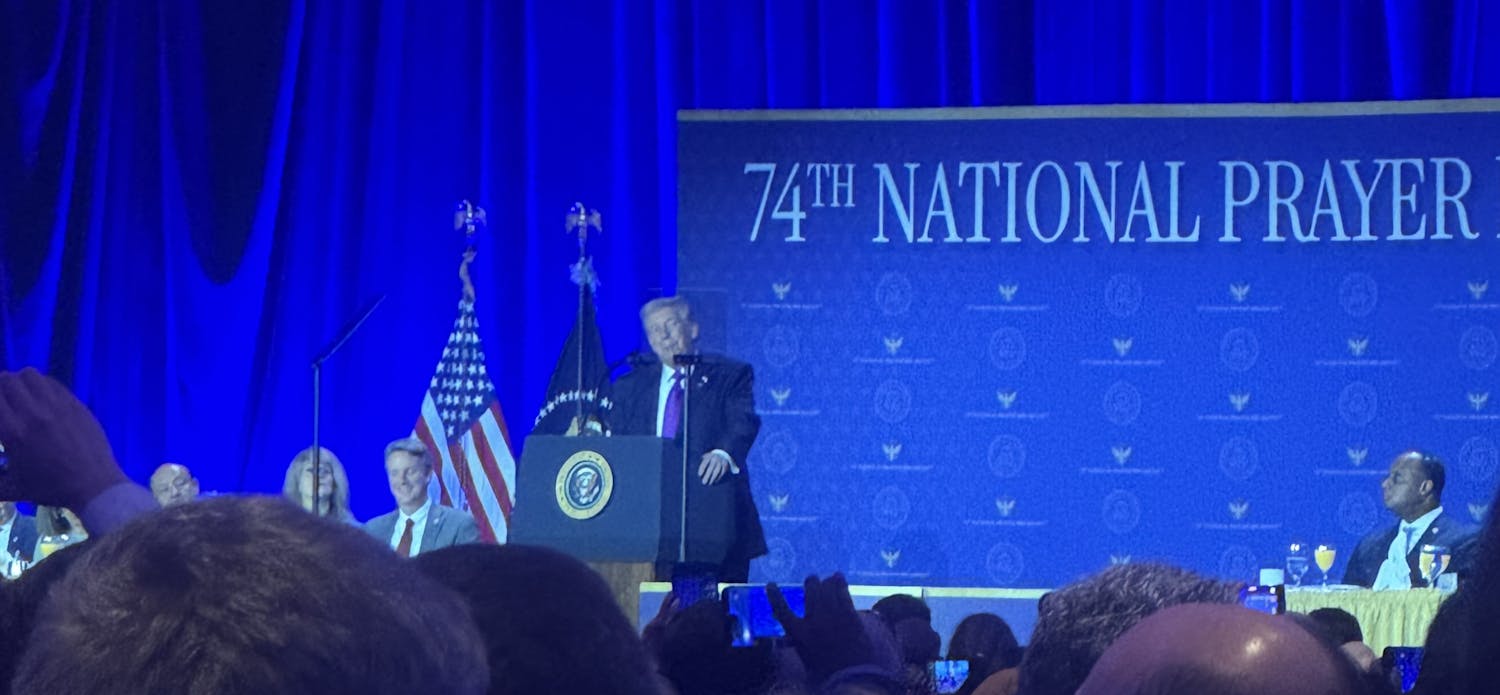
During the President's remarks, the audience was filled with smiles, nods, and applause, even as demonstrably false statements were made. At one point, it was suggested that anyone who believed in God could not vote for a Democrat, and that Democrats should not even be in the room. The audience responded with laughter and agreement.
What became clear to me was that this was not about faith. It was about permission.
In American politics, Republicans are often pre-approved. Their proximity to power is assumed. Their fundraising ability is trusted. Democrats, especially down-ballot, first-time, or working-class candidates, are expected to prove themselves before being taken seriously.
And proving yourself costs money.
In my state, it costs about $4,100 just to get on the ballot. Statewide races routinely require between $800,000 and $1 million to be considered viable. Meanwhile, a gubernatorial candidate can self-fund $50 million, far more than the office will ever pay.
We are living through a moment where there is extensive public evidence, ongoing investigations, and documented abuses of power connected to the highest levels of government. In any other system, this conduct would have disqualified someone from leadership. Instead, money has insulated it. Donations have normalized it. Power has protected itself.
This is how elections become the domain of the wealthy and the connected. This is how billionaires gain more influence than voters.
What I witnessed at the National Prayer Breakfast was not a conspiracy. It was something more familiar and more troubling. A system where money buys access, patience, and credibility. Where belief matters less than alignment. Where power protects itself quietly and efficiently.
I am running for office because I believe the government should work for people who do not have PACs, donor networks, or millions to spend. But this experience helped me understand why so few people like me ever make it into these rooms. Some do not even know rooms like this exist.
If we want a democracy that reflects the people it serves, we must confront the reality that our current system was not built for them. Until we do, elections will continue to be less about ideas and more about who can afford to belong.
I haven’t slept a full night since attending the National Prayer Breakfast.
The experience was eye-opening and heavy in ways I’m still processing. But it clarified something essential: if I am going to step into rooms like this, it will be with the people of Georgia.
Faith conversations matter. But so do the systems that determine whether people can find work, keep their jobs, care for their families, and live with dignity. That is the lens I carry with me as I run for Georgia Labor Commissioner.
What is clear to me now is this: running in this moment is not a mistake. It matters.
Georgia needs leadership that is centered on the people of Georgia — not personal agendas, not proximity to power, and not loyalty tests disguised as faith.
Running for office costs money. That’s the part people don’t always talk about. And that reality is not accidental. It is one of the ways everyday people are kept out of leadership.
I am building a people-powered campaign funded by everyday people in Georgia and across the country. My goal is simple: 2,000 people giving $25 a month. Enough to build a campaign that answers to voters, not donors seeking access.
If you believe leadership should look more like the people it serves, I invite you to be part of this work. I’ve started a public tracker so we can build it together.
Thank you for helping me carry Georgia into rooms where decisions are made and for insisting that the people of this state belong there, too.